
Fresh Graduate? Mga Dapat Mong Ihanda Bago Mag-Apply ng Trabaho Abroad
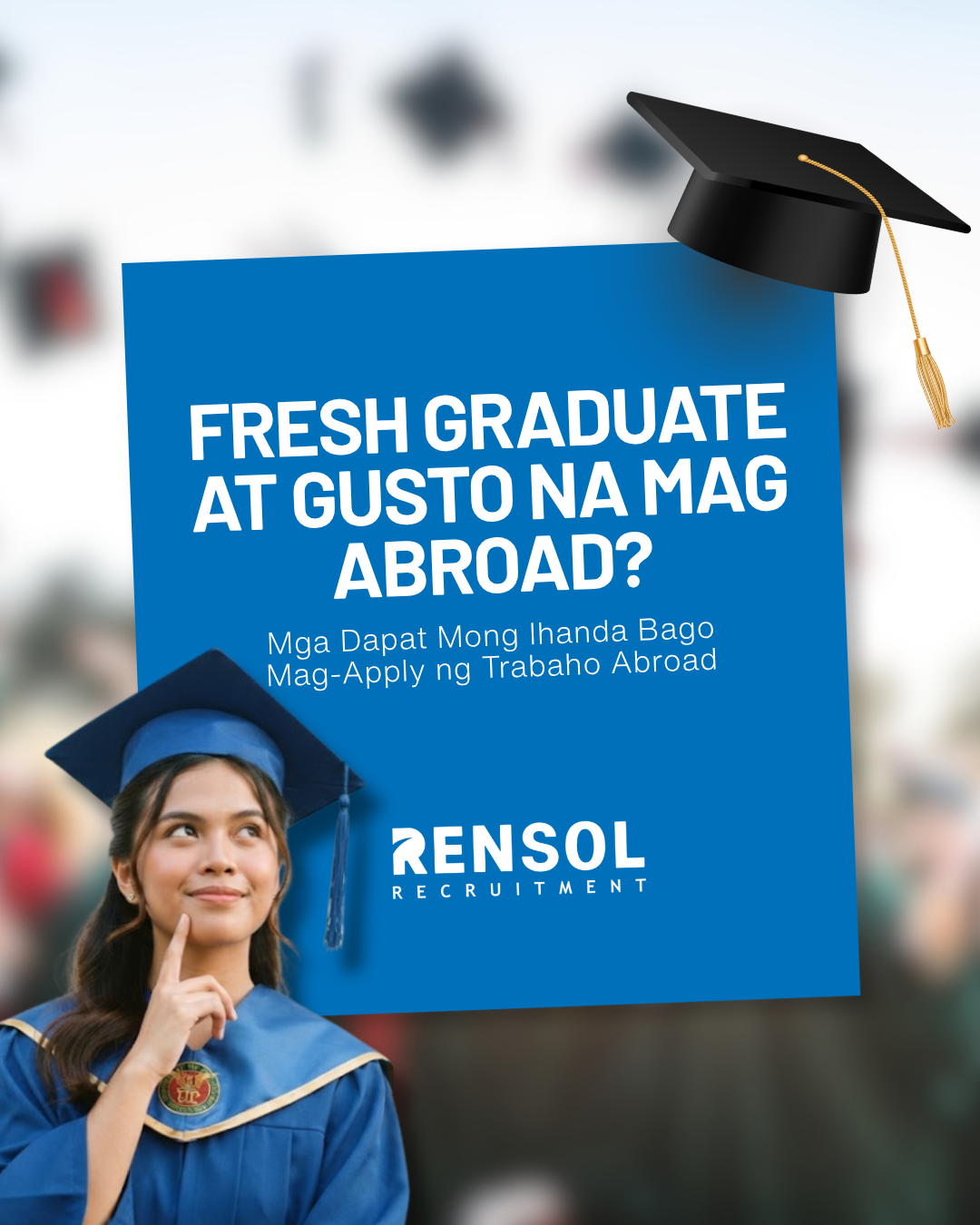
Graduating from college is an exciting milestone, and for some Filipino fresh graduates, the next goal is to start a career abroad.
Working overseas can open opportunities to gain international work experience, develop new skills, and experience a different work environment. But before sending your first application, it’s important to understand that applying for an overseas job requires more than simply having a diploma.
If you’re a fresh graduate planning to work abroad, here are some things you should prepare before starting your job search.
1. Know the Qualifications of Your Target Job
Before applying, check the specific qualifications of the position.
Some overseas jobs may require:
- Relevant educational background
- Work experience
- Specific technical skills
- Professional licenses or certifications
- Language proficiency
- Specific training or qualifications
- Age or other employer requirements
As a fresh graduate, you may not qualify for every position, and that’s okay. Focus on opportunities where your educational background, skills, and qualifications match what the employer is looking for.
2. Prepare a Professional Resume
Your resume is one of the first things an employer or recruiter may review.
Since fresh graduates may have limited work experience, highlight other experiences that demonstrate your skills and potential.
You can include:
- Internship or OJT experience
- Academic projects
- Organization involvement
- Volunteer experience
- Certifications and training
- Relevant technical skills
- Language skills
Make sure your resume is accurate, updated, and tailored to the position you’re applying for.
3. Don’t Underestimate Your Internship Experience
Your OJT or internship may be one of your most relevant experiences as a fresh graduate.
Think about the actual tasks you performed and the skills you developed.
For example, instead of simply writing “Completed OJT,” explain the responsibilities you handled, such as assisting customers, preparing reports, creating content, operating equipment, supporting administrative tasks, or working with a team.
These experiences can help employers understand what you already know and what you may be capable of learning.
4. Prepare Your Important Documents Early
If you’re considering working abroad, it’s helpful to keep your personal and professional documents organized.
Depending on the job and destination country, you may be asked to provide documents such as:
- Valid identification
- Passport
- Diploma or proof of graduation
- Transcript of Records
- Training certificates
- Professional licenses, if applicable
- Other documents required for the application
Requirements can vary depending on the position, employer, and destination, so always check the specific requirements of the opportunity you’re applying for.
5. Build Skills Before and While Job Hunting
Your degree is important, but additional skills can also help you become more prepared for the international job market.
Consider developing skills that are relevant to your target career, such as:
- Communication
- English proficiency
- Customer service
- Computer skills
- Technical skills
- Problem-solving
- Teamwork
- Industry-specific certifications
If your target position requires a specific certification or training, research the requirements early so you can prepare accordingly.
6. Research the Country and Work Environment
Wanting to work abroad is exciting, but it’s important to understand where you’re applying.
Research the country’s:
- Workplace culture
- Cost of living
- Basic employment practices
- Language requirements
- Weather and lifestyle
- Common workplace expectations
Learning about your potential destination can help you set realistic expectations and prepare for a new environment.
7. Learn How to Identify Legitimate Overseas Job Opportunities
One of the most important steps for aspiring first-time OFWs is knowing how to verify a job opportunity.
Be cautious when dealing with job offers that promise unusually high salaries with little or no qualifications, pressure applicants to pay immediately, or provide incomplete information about the employer and position.
Before applying or submitting personal documents, verify the recruitment agency and the job opportunity through the appropriate official channels.
For Filipino jobseekers, checking the recruitment agency’s licensing and the details of the overseas job order can be an important part of your research.
8. Prepare Financially
Even when an overseas opportunity does not require a placement fee, you may still have personal expenses during the application and preparation process.
Depending on your situation, these may include expenses for documents, transportation, medical requirements, training, language tests, or other application-related requirements.
Understanding the possible costs ahead of time can help you manage your budget and avoid unnecessary financial pressure.
9. Prepare for Interviews
An overseas employer may want to know more than just your educational background.
Be prepared to discuss:
- Your education
- Internship or OJT experience
- Skills
- Strengths
- Career goals
- Why you’re interested in the position
- Why you want to work abroad
Practice answering questions clearly and honestly. If you’re a fresh graduate, don’t feel pressured to pretend that you have experience you don’t have. Instead, highlight what you’ve learned and your willingness to develop professionally.
10. Be Open to Starting Your Career From the Ground Up
Your first overseas job may not be your dream position immediately.
As a fresh graduate, your first goal can be to gain relevant experience, develop your skills, understand the workplace, and build a strong professional foundation.
Be realistic about the qualifications required for your target position and remain open to opportunities that can help you develop toward your long-term career goals.
Your Overseas Career Starts With Preparation
Working abroad as a fresh graduate is possible for some career paths, but preparation matters.
Before applying, take the time to understand the job requirements, organize your documents, develop relevant skills, research your destination, and verify the legitimacy of the opportunity.
Most importantly, don’t rush simply because you want to leave the country immediately. A good career decision starts with understanding the opportunity and making sure it matches your qualifications and goals.
Ready to explore overseas career opportunities? Keep your documents prepared, stay informed, and look for legitimate opportunities that match your skills and qualifications.
Leave a Reply
Want to join the discussion?Feel free to contribute!